






INCUNABLE
(Latin in-cunabula, swaddling clothes or cradle, hence also cradle prints) Term for printed works from the infancy of printing, when the technique was still in its cradle. It covers books from the first fifty years after the invention of printing, that is from about 1450 up to and including 1500.
The number of incunabula is estimated at 27,000 to 29,000 different works, comprising books, pamphlets and broadsides, of which some 500,000 copies survive.
Among the best-known incunabula, alongside the Gutenberg Bible of Mainz from 1452 to 1454, is Hartmann Schedel's World Chronicle, printed by Anton Koberger in Nuremberg in 1493.
ILLUMINATION
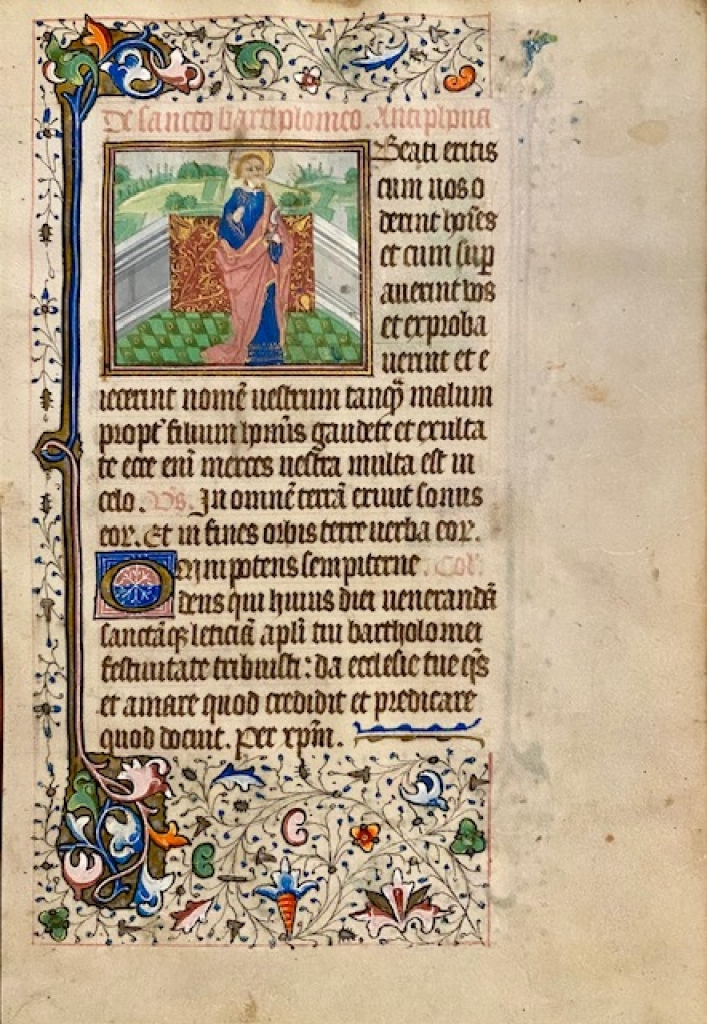
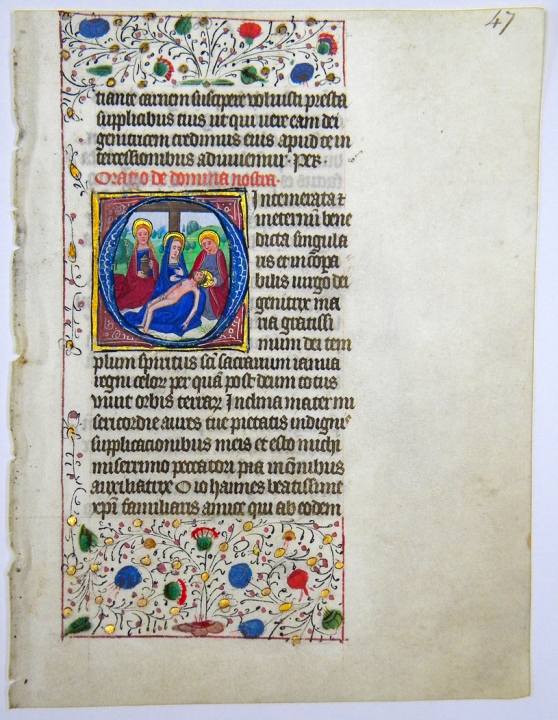
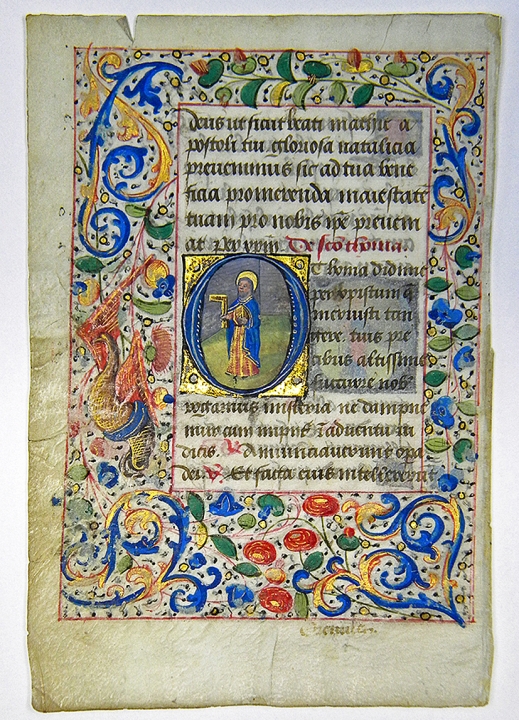
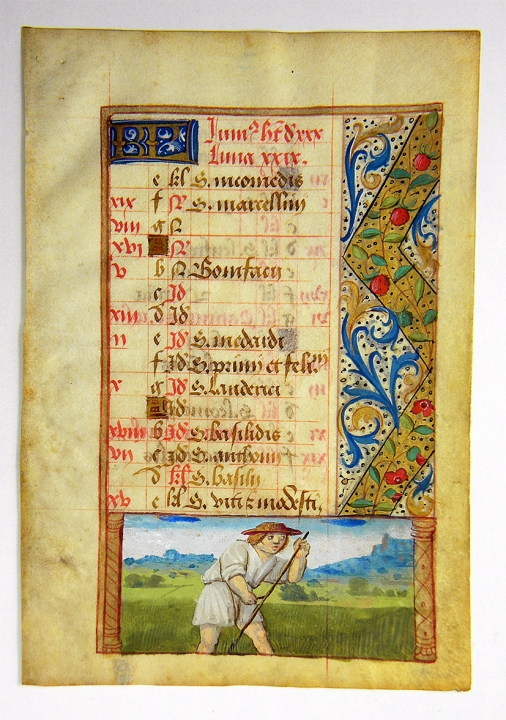
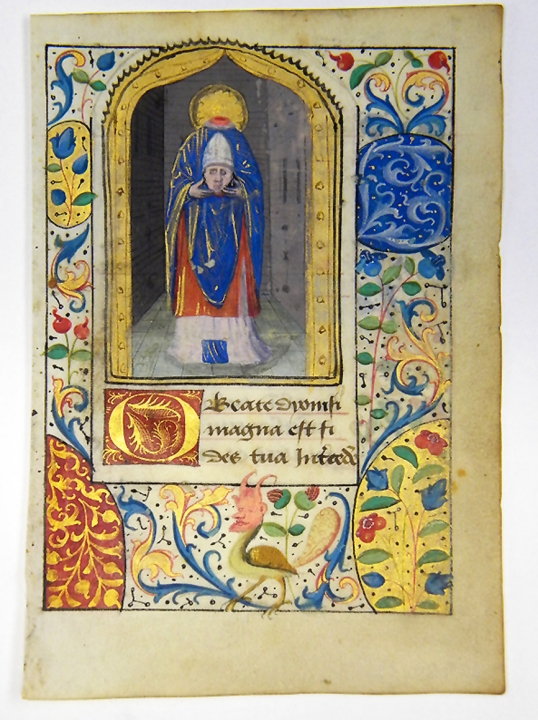
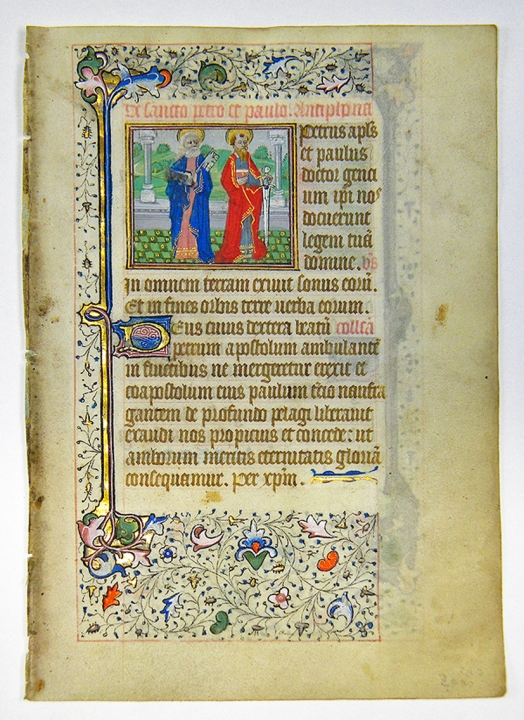
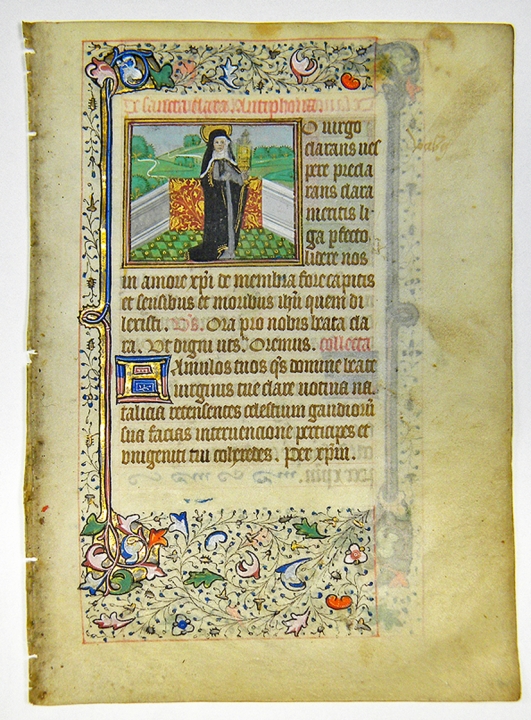
Term for book painting in antique and medieval manuscripts. Such manuscripts were often richly adorned with illustrations, initials and ornaments. Outstanding examples are the often lavishly decorated codices, books of hours and missals of the High and Late Middle Ages, roughly the 11th to 15th centuries.
MANUSCRIPT
(Latin manu scriptum, written by hand) A hand-made document, deed or book.
Until the invention of printing, manuscripts were the only form of written publication. Texts were usually set down in ink and similar pigments on parchment, papyrus or paper.
Manuscripts gained particular importance from the 13th century. In the writing rooms of monasteries magnificent manuscripts were produced: initials and important passages were highlighted in red and blue, partly decorated and illustrated with figurative miniatures.
Even after the invention of printing, manuscripts remained significant at first, as many were sceptical of the new technique. To hold their own against printed books, particular value was placed on fine illustrations. Manuscript production thus enjoyed a final great flowering in Europe, in book illumination, and well into the 16th century especially decorative manuscripts continued to be made.
MISSAL
The mass book of the Catholic Church. Especially in the 15th century several magnificently illuminated mass books were produced as manuscripts, such as the Cistercian Wolfgang Missal of 1493.
PARCHMENT
A tough, supple writing support made from dehaired, smoothed and dried animal skins of sheep, goat or calf. It was particularly important in the Middle Ages as a material for manuscripts. Compared with the papyrus used before, parchment had the advantages of being writable on both sides and reusable after the writing had been erased, and the fineness of its surface made decoration and illustration easier. After the invention of paper, parchment lost importance from the 15th and 16th centuries.
POST-INCUNABLE
Term for prints from the period between 1501 and about 1550, sometimes limited to the years up to 1520 or 1530. One of the best-known post-incunables is Theuerdank, printed in Nuremberg by Johann Schönsperger the Elder in 1517, commissioned by Emperor Maximilian I and illustrated with unusually sculptural woodcuts.
RUBRICATION
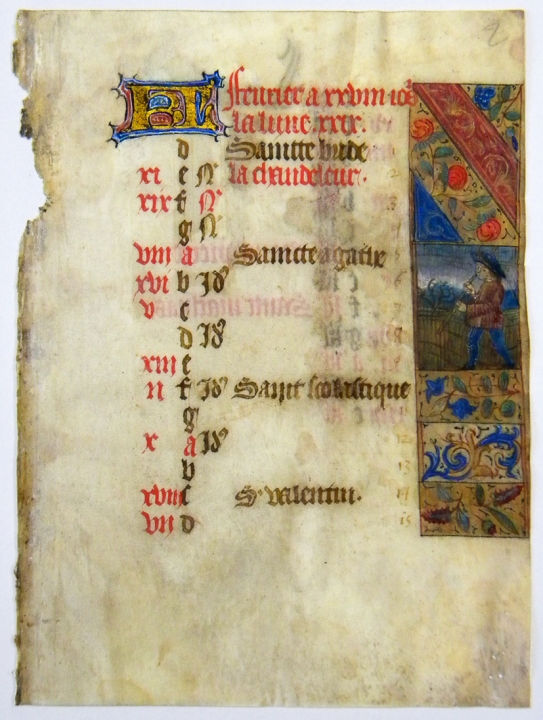
(from Latin rubricare, to colour red) In medieval manuscripts and in incunabula it was customary to highlight individual sections or initials in red or blue. This was the work of the rubricator. In the simplest form it is a vertical red stroke through the letter, in more elaborate form a larger drawn and decorated letter.
BOOK OF HOURS
(also horarium, livre d'heures) Devotional and prayer books of the Catholic Church intended for lay people. The name derives from the prayers they contain, appointed for the different hours of the day. Books of hours flourished in the 14th and 15th centuries in terms of both dissemination and artistic decoration. France in particular was a centre for the production of richly decorated handwritten works. Individual copies rank among the most magnificent illuminated manuscripts ever produced, such as the books of hours of the Duke of Berry, 1340 to 1416. From the end of the 15th century printed books of hours with woodcuts also appeared.

